
Trump threatens new tariffs, attacks Carney and Ford as trade war escalates
By John White
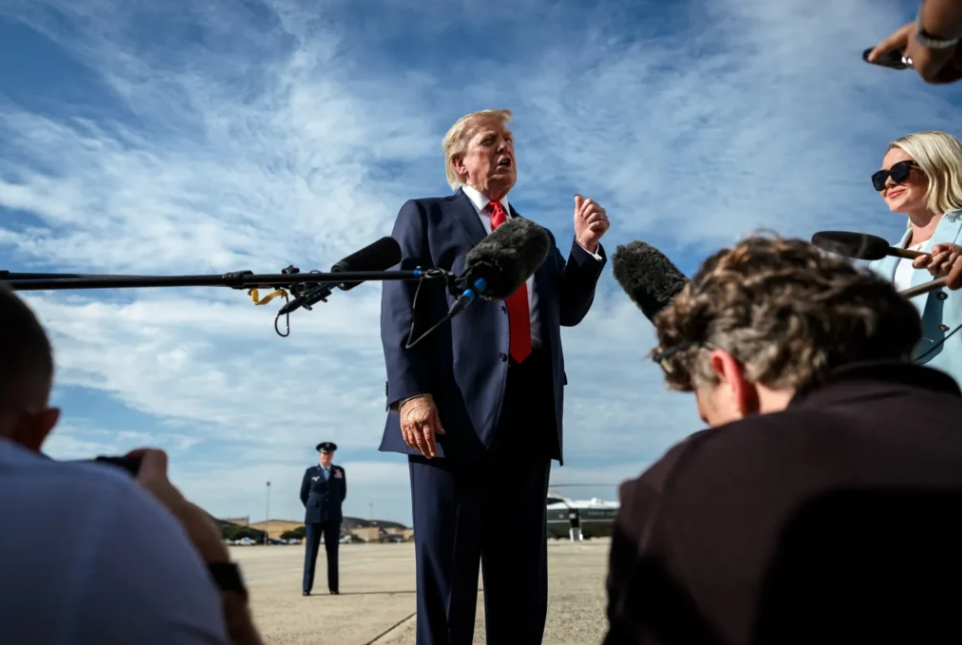
U.S. President Donald Trump threatened Monday to impose 50-per-cent tariffs on Canadian vehicles and auto parts, then attacked Prime Minister Mark Carney and Ontario Premier Doug Ford as the Conservative opposition demanded details of failed trade negotiations.
Trump announced the proposed duties in a Truth Social post, saying they would apply to Canadian cars, trucks, auto parts and steel at the beginning of next year.
“On January First, 2027, Tariffs on all Cars, Trucks, both large and small, Automotive Parts, and Steel, will be increased to 50%,” Trump wrote.

In a second social media post, Trump called Carney “Governor Carney” and dismissed Ford as his “Flunky,” warning Canada to “fall in line” or face additional consequences.
He also attacked Ford personally, comparing the Ontario premier to his late brother, former Toronto mayor Rob Ford.
Conservative Leader Pierre Poilievre called on Carney to reconvene Parliament and release the text of the U.S. trade proposal rejected by the federal government.
In a letter published Monday, Poilievre said Canadians should know what was offered, how much retaliatory tariffs could increase household costs and how the government intends to protect jobs in the steel, aluminum, lumber and auto sectors.
“Canadians must see it to judge what options are on the table,” he wrote.
Poilievre also called for tax and regulatory changes, including eliminating what he described as the industrial carbon tax and approving stalled economic projects.
In a separate statement issued Aug. 22, he described the U.S. tariffs as unjustified and called for Canadians to stand together.
“Canada cannot accept one-sided tariffs that will deindustrialize our country. Nor can we accept a bad deal,” Poilievre said.
Canada plans retaliatory tariffs for Sept. 8
Trump’s latest threat came two days after separate U.S. tariffs of 50 per cent took effect on Canadian products following the collapse of trade negotiations.
A White House proclamation set the effective date for those measures at 12:01 a.m. ET on Saturday, Aug. 22.
The White House said those tariffs cover products ranging from wine and hockey sticks to cement, including goods that otherwise qualify for preferential treatment under the Canada-United States-Mexico Agreement.
Energy, potash and products already subject to separate Section 232 tariffs are excluded from that earlier round, according to a White House fact sheet.
U.S. steel tariffs had already increased to 50 per cent in June 2025, according to U.S. Customs and Border Protection.
Trump did not provide details in his post about how the proposed Jan. 1 duties would be implemented.
Carney suspended negotiations Friday, Aug. 21, saying the latest U.S. proposal would undermine Canadian industries and sovereignty.
“We cannot accept what they have offered, and we will not give what they have asked,” Carney said in remarks delivered Saturday.
He said Canada would match the newest U.S. tariffs dollar for dollar, with counter tariffs scheduled to take effect Sept. 8, the Tuesday after Labour Day.
Carney said the Canadian response would focus on steel, dairy, appliances, agricultural equipment, pulp and paper and electronics.
He acknowledged the counter measures would increase costs and reduce choices for Canadians but argued they were necessary to protect domestic workers and businesses.
Carney said Canadian negotiators had been willing to remove existing counter tariffs on strategic industries if the United States substantially reduced its own duties.
However, he said the American side introduced terms that were unfair and undermined the benefits of a potential agreement.
“They asked too much and offered too little,” Carney said.
On Monday, the federal government also announced a shipbuilding contract worth more than $11 billion to build six Canadian Coast Guard icebreakers at the Davie shipyard in Lévis, Que.
The government said the project would use Canadian steel and create nearly 5,000 jobs during construction.
Ontario separately announced it would expand eligibility under its existing Protect Ontario Financing Program to help workers and businesses affected by U.S. tariffs.
American politicians warn tariffs will hurt U.S. workers
Several American politicians, including Democrats and at least one Republican, have warned the broader trade dispute threatens workers, businesses and consumers on both sides of the border.
Virginia Gov. Abigail Spanberger wrote Monday to senior Trump administration officials, warning the breakdown in trade negotiations threatens workers, farmers and businesses in her state.
“The collapse of recent tariff negotiations will cause immediate harm to Virginia workers, farmers, foresters, and businesses,” Spanberger said in an official statement.
Canada is Virginia’s largest export market, according to the governor’s office, which said the state exported $2.9 billion U.S. in goods to Canada in 2025.
Spanberger said Canadian counter tariffs expected in September would make Virginia exports less competitive.
Virginia Rep. Don Beyer, a senior Democrat on Congress’s Joint Economic Committee and a member of the House Ways and Means Subcommittee on Trade, also criticized Trump’s approach Monday.
“Trump’s trade war with Canada is doing lasting damage to one of our oldest and most important strategic alliances,” Beyer said in an official congressional statement.
He warned American consumers would face higher prices and criticized Trump administration officials for insulting Canada.
Spanberger and Beyer addressed the wider tariff dispute in their Monday statements. Neither specifically referred to Trump’s proposed Jan. 1 vehicle and auto-parts tariffs.
Michigan Gov. Gretchen Whitmer warned over the weekend that her state is particularly vulnerable because of its close economic ties to Canada and the auto industry.
“Michiganders literally cannot afford to keep paying these Republican tariff taxes,” Whitmer wrote in a social media post.
California Gov. Gavin Newsom also criticized the tariffs imposed over the weekend.
“Our closest ally. Our critical trading partner. And Trump is hitting Canada with 50% tariffs,” Newsom wrote in an online statement.
Vermont Democratic Sen. Peter Welch called on Trump to abandon the duties and urged Congress to reclaim its authority over trade policy in a statement issued Aug. 22.
Republican Sen. Susan Collins of Maine also warned the breakdown in negotiations would create uncertainty and higher costs for businesses and families in her state.
In an official Senate statement issued Aug. 22, Collins said Maine imports approximately $2 billion U.S. in non-petroleum products from Canada annually and urged both governments to return to the negotiating table.

John White John is the Director of News for Vista Radio. He has more than 30 years of experience in journalism, with an early eye cast to digital news innovations. He attends the Online News Association conference every year to learn about the cutting edge opportunities for his team to adopt and adapt.